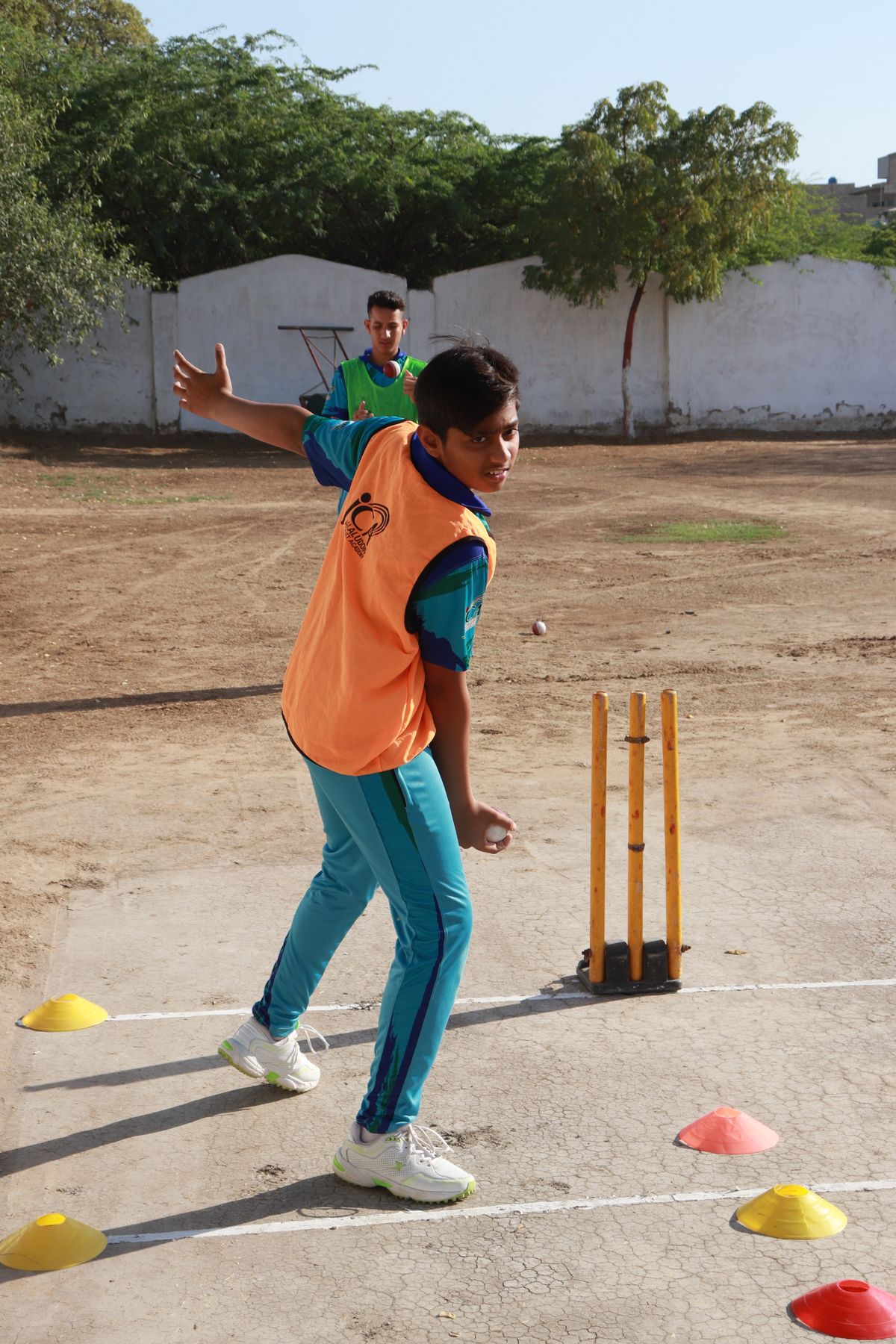
Begin with the purpose of the delivery
Choose a broad target near the striker’s end and understand the difference between line and length. Line describes direction across the batter; length concerns where the ball pitches. A beginner needs feedback on both. Hitting the target once does not establish control, so use small comparable sets and count repeatable outcomes rather than only the best ball.
Learn a legal bowling action with guidance
Bowling is not simply throwing the ball overarm. The laws regulate the delivery action, and competition regulations can add assessment procedures. A bent-looking elbow in one photograph does not alone establish legality. Learn the movement slowly with a qualified coach where possible. Do not try to create pace by deliberately snapping the elbow straight during the delivery swing.
Build from standing to a short approach
Rehearse a comfortable arm circle and release without a long run-up. Add one or a few walking steps only when balance is manageable. Let the movement continue naturally after release rather than stopping abruptly. There is no requirement to copy a fast bowler’s leap or extreme body position. If the action causes discomfort, stop and obtain appropriate help instead of forcing repetitions.
Use suitable distances and equipment
Adult pitch length is not automatically the right learning distance for every child or beginner. Use the club’s age-appropriate setup and a ball the player can handle. Keep the return area clear and the feeder or catcher protected by distance and positioning. A small target on a safe surface is enough to practise direction; hard balls are unnecessary for the earliest stages.
A first control session
Start with a few gentle movements, then bowl short sets toward a broad target with a pause between them. Track where each ball pitches and whether the approach finishes in balance. Pick one adjustment, such as a steadier approach, and repeat at the same modest effort. Increasing speed while changing the grip and target makes the feedback much harder to interpret.
When to introduce pace or spin
Players can explore both styles without being assigned a permanent identity immediately. Finger placement, seam orientation and spin release add tasks, so introduce one at a time. Prioritise lawful action, comfortable movement and basic control. Follow local age and workload guidance, and do not bowl through pain. A useful early session ends with a clearer skill, not with the player exhausted from maximum-effort deliveries.
How do you know when to make the drill harder?
Look for several comparable deliveries with manageable balance and a clear intended target. One accidental accurate ball is not enough. Increase only one challenge: a little more approach, a slightly smaller zone or a modestly more variable task. Do not add speed, a live batter and a new release together. If control deteriorates, return to the last useful level and identify the missing skill. The player should be able to explain what they are trying to do without a long list of technical commands. A simple session is not inferior if it produces a repeatable action and better understanding of the ball’s path.
What should a parent or helper say between deliveries?
Describe an observable result and ask one useful question. For example, the ball landed short of the target; did the final step feel rushed? Avoid announcing a complex diagnosis from one attempt or demanding more effort after every miss. The helper should also maintain a safe collection routine and stop anyone entering the delivery lane unexpectedly. With children, follow the club’s age-appropriate ball, pitch and workload guidance rather than copying adult professional training. Encouragement should recognise clear intention and learning, not pressure the player to continue when tired or uncomfortable. A qualified coach can assess issues beyond the helper’s experience.
A first bowling task needs an observable outcome
Start with sending a suitable soft ball into a broad agreed area using a recognisable bowling action. Do not make speed, swing and perfect seam position simultaneous goals. The lane should be clear, the distance appropriate and the target wide enough to reveal a pattern. A beginner who cannot comfortably hold the ball needs suitable equipment before stronger grip instructions.
- Rehearse the movement slowly without releasing a ball, with guidance if the action is unfamiliar.
- Use a standing or very short comfortable approach and aim at a broad floor area.
- Observe whether misses are mainly left, right, too full or too short; name one pattern rather than calling the whole attempt wrong.
- Retain the same easy effort for a short second set before deciding whether to extend the approach.
What should count as progress in the first session?
A first session can succeed when the player understands the action, releases comfortably and starts to recognise where the ball lands. It need not end with a long run-up or a live batter. Suppose a beginner puts six of eight soft balls near a broad length area from a short approach. Adding several running steps makes the release erratic. The sensible response is to restore the controlled approach and introduce movement gradually, not declare that the player lacks talent.
A legal action is not established merely because a ball reaches the target. Likewise, a standard phone recording cannot certify elbow legality from a blurred frame. Appropriate coaching can guide the movement without turning every introductory attempt into a technical examination. Keep the feedback understandable: a steady approach, an intention toward the target and a natural follow-through. A live striker adds attention and safety demands, so introduce one only when the exercise supports it. The session should finish with the next task clearly identified, such as repeating a comfortable action or making a modest improvement to direction, rather than a promise that a particular grip will immediately produce wickets.
A practical example
Practice example: A beginner bowls two small sets from a walking approach using a soft ball. The first target is deliberately broad. After reviewing balance and landing area, the next set changes only the approach rhythm, making the result easier to understand.
Sources & scope
These are general skill explanations and illustrative practice suggestions. Adapt to the player, ball, surface and available supervision. Use suitable protective equipment for hard-ball practice; a qualified coach can assess individual technique.