Connect each signal to the record it changes
| Decision | Recognisable action | What to record next |
|---|---|---|
| Out | Raised index finger. | Identify the batter and official dismissal mode before closing the batting entry. |
| No ball | One arm extended horizontally. | Record the penalty and any additional scoring; do not advance the ordinary legal-ball count. |
| Wide | Both arms extended horizontally. | Record the correct wide award, separately from batter runs. |
| Four / six | Arm swept across the body / both arms raised. | Use the official boundary award, not a guess from the shot’s distance. |
| Byes / leg byes | Open hand raised / hand touches a raised knee. | Use the appropriate extras category rather than adding to the batter’s score. |
Consider an invented over in which a batter misses, the ball passes the keeper and the umpire signals a boundary with a separate extras signal. The boundary tells the scorer the awarded amount; the additional signal identifies where those runs belong. Recording only “four” loses information needed to reconcile individual batting and bowling entries. A single event can therefore require more than one piece of communication.
When two scorers are working, acknowledge the signal and compare the running total at an agreed pause. If one saw a wide and the other assumed byes, the disagreement is about classification before it is about arithmetic. Resolve the official award rather than splitting the difference. A correction should leave a readable final entry and preserve enough context to explain why the numbers changed.
For learning, rehearse a small set of clearly labelled invented events. The scorer should state the team increment, batter increment and whether a legal ball was used. This tests understanding beyond recognising a pose. It also reveals why an appealing fielder, a replay graphic and the umpire’s final decision are different stages of the incident.
An appeal asks for a decision
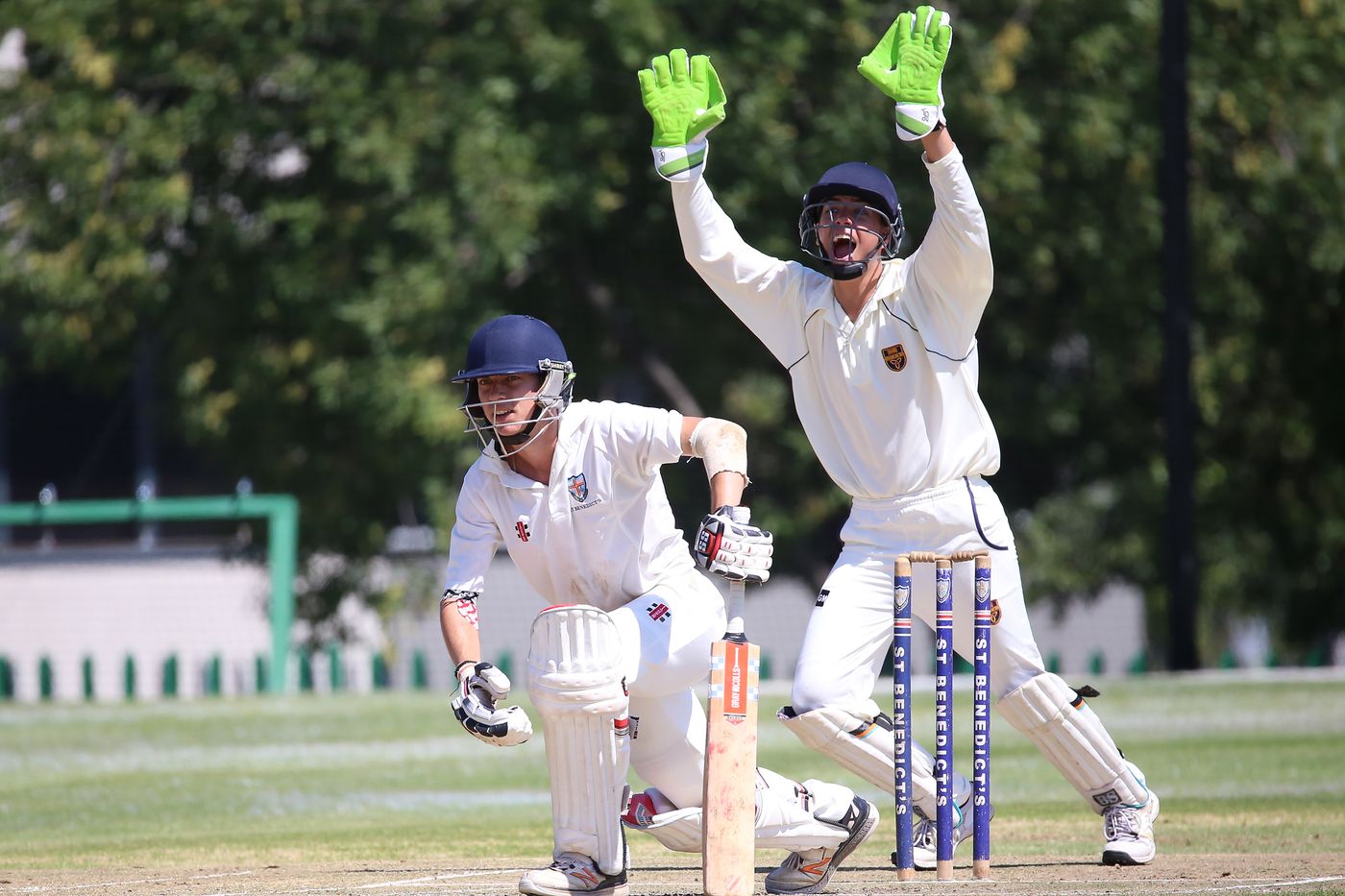
Fielders appeal when they believe a batter may be out under the laws. The appeal itself does not dismiss the batter, and its volume is not evidence that the conditions were met. The umpire decides. The laws also regulate timing and related circumstances, so a general viewer should not assume an appeal can be made indefinitely after play has moved on. In a recreational match, ask questions respectfully through the appropriate channel. Repeated shouting after a decision is different from making an initial appeal and does not change the legal facts.
Out, no ball and wide are distinct communications
The familiar raised index finger communicates an out decision. A no ball is signalled with one arm extended horizontally, while a wide uses both arms extended horizontally. These different shapes help scorers distinguish events even when a voice cannot be heard. Learn the signal together with its scoring meaning. A no ball does not mean every possible dismissal is impossible, and a wide does not become a batter’s personal run. The signal identifies the decision; the relevant laws determine its consequences for the delivery.
Recognise the boundary signals
A four is communicated by the umpire’s arm movement across the body, while a six is signalled with both arms raised. The distinction depends on the ball’s path and the boundary law, not how powerful the shot looked. A ball that travels almost all the way through the air but bounces before crossing normally has the ordinary four-run allowance. The scorer follows the official award, including any correction after a boundary check, rather than deciding from crowd reaction or a partial view of the rope.
Byes and leg byes need their own entries
A bye signal uses a raised open hand; a leg-bye signal involves touching a raised knee. They communicate scoring that is not credited to the striker’s batting total in the same way as a shot off the bat. A beginner scorer should learn these early because they explain why team runs can exceed the sum of batter runs and why bowler figures do not always match the team total. Do not record all missed-ball boundaries as byes without checking whether the umpire called wide, leg bye or another category.
Dead ball means a legal state, not a dull delivery
The dead-ball signal uses crossed and recrossed wrists below the waist. It communicates that play is dead under the relevant provision. Whether the delivery counts and which scoring remains depend on the reason and timing. A dot ball, by contrast, is simply a scoring description for a delivery without a run; it is not synonymous with a dead-ball call. Keep those concepts separate when learning signals. A scorer needs the official consequence, not merely a visual label attached to the umpire’s gesture.
Scorers acknowledge what they have received
Signals are communication between officials and the scoring record. A scorer should acknowledge the appropriate signal so the umpire knows it was seen. If several signals are required, each carries information and should not be replaced by a guessed combined total. In a club game, agree the acknowledgement method before play. If visibility is poor, arrange a practical solution with the officials rather than hoping every decision can be reconstructed from the players’ reaction. Good communication prevents a small missed signal becoming a larger scorebook disagreement later.
A simple learning exercise without a match
One person acts as umpire and another as scorer. Use invented deliveries such as a legal ball for four, a wide with an official award or a ball passing for byes. The umpire gives the relevant signal and the scorer says how the team, batter and bowling record change. Keep the examples straightforward first, then add a multi-signal incident. The objective is connecting decision, signal and record, not merely recognising a gesture from a photograph without understanding what it means for the score.
Reviews and referrals add another layer
A televised match may show an umpire referring a decision or players requesting an eligible review under the competition’s procedure. Those actions are not the same as the final signal for out, not out or a scoring award. A replay sequence may preserve or change an earlier decision. Wait for the official outcome before assuming a graphic or player gesture is final. Recreational games without review technology still use the laws and ordinary umpiring process; the absence of a screen does not turn player confidence into a substitute decision.
How to discuss an unfamiliar signal accurately
Describe what the umpire did and consult the current signal list and match explanation. Do not infer a penalty or dismissal solely because players changed positions afterward. Some signals communicate administrative information such as a new ball, while others change the score or status of a delivery. A still image may capture only part of a motion. Watch the complete motion and the official explanation. A still photograph may show only one position within a signal and can omit the part that distinguishes it from another gesture.
Sources & scope
The MCC Laws provide the foundation. Competition playing conditions can modify how a match operates; use the edition adopted by your organiser. This guide explains the topic in original language and does not replace the official laws.