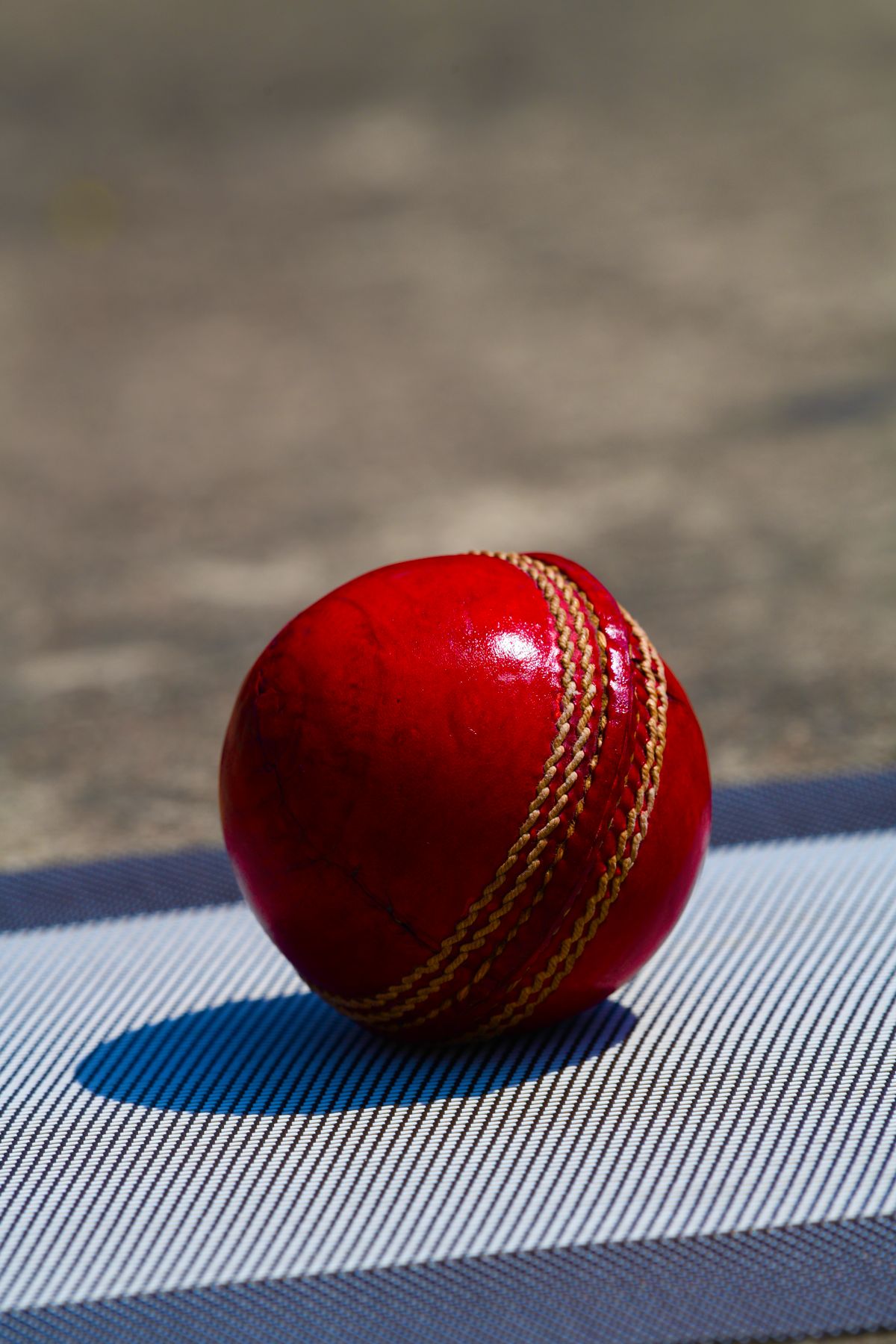
Leather match balls and their intended use
A traditional leather cricket ball is a hard sporting ball with a stitched seam and a manufactured internal construction. Makers offer products for different playing levels and specifications. Use the ball required by the competition rather than choosing solely by price or appearance. Hard-ball practice needs suitable facilities, protection and supervision. An old ball may be less shiny but remains a hard ball; age does not automatically make it appropriate for casual catching at close range.
Red, white and pink describe colour choices
Different formats and lighting environments commonly use different coloured match balls, but competition rules determine the actual choice. A red ball is not intrinsically a beginner category, and a white ball is not inherently softer. Colour can affect visibility in the surroundings, yet construction and specification still need checking. If organising a session, think about background and light as well as the ball’s intended use. Do not rely on colour to identify a ball’s weight or hardness.
Two-piece and four-piece descriptions
These terms generally refer to how sections of the leather cover are assembled, not a complete quality score. Product quality also depends on the materials, internal construction and manufacturing. A well-specified ball should be selected for its competition or practice role. Compare like-for-like models and read the manufacturer’s description. Do not assume that every four-piece ball is automatically suitable for elite play or that every two-piece ball is suitable for a child.
Soft training balls for introductory skills
Foam, soft rubber and other training balls can support introductory movement and catching when chosen appropriately. They still differ in bounce, weight and how they behave on a surface. Confirm the intended age and activity rather than assuming all training products are harmless. Maintain a clear practice area and appropriate spacing. A change to a harder ball should be a planned progression with suitable protection, not a surprise during a drill that players learned with a soft ball.
Tennis balls, taped balls and local formats
Informal cricket uses several ball variations, including ordinary tennis balls, heavier tennis-style balls and taped constructions. Local rules and playing spaces vary. A taped ball can behave differently from an uncovered one, and added materials do not create a standardised product. Explain the actual ball when choosing a bat or planning a session. Avoid using hard improvised cores or concealed modifications that make the ball’s behaviour unpredictable to other participants. Everyone should know what is being used.
Size and weight require the correct specification
Junior, senior and different competition categories may have different ball requirements. Check the relevant current rules and the manufacturer’s product information. A shop shelf label should not replace the organiser’s specification. Keep mixed training equipment separated and clearly identified so a hard or heavier ball does not enter a soft-ball drill accidentally. If a ball is misshapen, splitting or otherwise damaged, remove it from the activity and ask whether it is still appropriate for its intended role.
Build a purposeful practice selection
Choose a ball for each named task instead of describing the whole bag as suitable for beginners. For instance, an introductory close-range movement exercise can use its agreed soft ball, while a separate supervised net session uses the specified ball appropriate to that facility and protection. Keep the two groups identifiable, tell the feeder which group belongs to which task and announce a change before it happens. If a drill needs comparable repetitions, use a consistent type and known condition within that set. Deliberately mixed conditions can serve a different coached purpose, but should be labelled as a change in the task rather than mistaken for inconsistent skill.
Match the ball to the purpose of the session
| Situation or feature | Useful check | Avoid this assumption |
|---|---|---|
| Learning basic movement in a small safe area | A suitable soft training ball. | Clear space and controlled feeding still matter. |
| Preparing for supervised leather-ball nets | A specified appropriate leather practice ball. | Facility permission, protective equipment and supervision. |
| Playing a league fixture | The competition’s required ball model or specification. | Colour alone does not prove compliance. |
| Informal tennis-ball cricket | The actual ball agreed by participants. | Heavy, taped or altered variants can change the task. |
Use a deliberate ball change rather than a surprise
Suppose a group starts a catching session with soft balls and later moves into an appropriate hard-ball activity. Announce the change, confirm that the space and protection suit it and reset the feeding distance and task. A participant who handled one ball confidently has not automatically consented to an unfamiliar one at the same speed. Clear transitions are especially important when several feeders share a bag and the players cannot identify the next ball before it is released.
When choosing a practice collection, first write the jobs it must do. A few suitable balls for repeatable seam-release work may be more useful than a large unlabelled mix. A softer option can support close-range coordination, while a separate specified ball supports representative net practice. Do not describe these as a universal ranking from beginner to professional: one player can use different balls for different purposes in the same week. The important question is what feedback and demands the task requires.
Keep the product description when ordering replacements. Record type, size category and intended use so a shop does not substitute a visually similar but materially different item. For a formal match, the organiser’s specification takes priority over personal preference. For an informal format, agree the ball and rules before play begins. A red, white or pink appearance is useful for visibility and identification, but cannot tell you the complete internal construction, hardness or compatibility of an unknown product.
Before changing the ball in a drill
- Define the activity and environment first.
- Confirm the appropriate ball and any required protection.
- Keep different types visibly separated.
- Tell every participant when the equipment or task changes.
A practical example
A coach separates foam balls used for introductory catching from leather balls used in supervised hard-ball nets. A white ball in the bag is checked rather than assumed soft because of its colour. Each activity receives a known ball, an appropriate space and the protection required for that session.
Sources & scope
Equipment construction and instructions vary by manufacturer and model. Check the instructions supplied with your own item. This is an independent explanatory guide, not a product test, certification or brand endorsement.